
Notes · Note 09 · 4 min read
Questions to ask your friends that get past small talk
You’ve known them for ten years. You talked for three hours last night. You can’t remember a single thing either of you said.
Long friendships run on updates. Work is fine, the flat is fine, someone’s cousin is getting married. It’s comfortable and it can go on for years without anyone learning anything new. A good question changes the conversation for an evening.
01Ask about memories you share
Shared memories are where friends disagree in the most fun way. Try asking what you each remember about a night you were both there for. Then ask what the other person remembers differently. You’ll find out something about each other within a minute.
02Questions worth trying
- What do you remember about the first time we met that I’ve probably forgotten?
- What’s something you changed your mind about this year?
- What have we never quite agreed on?
- When did something go wrong for you and turn out fine?
- What does a good, ordinary day look like for you now?
- What do you want people to remember about tonight?
Shared memories are where friends disagree in the most fun way.
03Answer first
A big question asked cold can feel like a test. Answer it yourself first, briefly and honestly. It shows the size of answer you mean and makes it easy to follow.
04Let the silence sit
Good questions take a moment. Resist the urge to rescue the pause with an easier question. The answer after a silence is usually the real one.
05Make it a thing you do
Some friends keep a standing question for every dinner. Others pass a phone around and answer one together. Together in Color with Words works that way: two or three of you, one painting, a question for each part of it.

Try it tonight
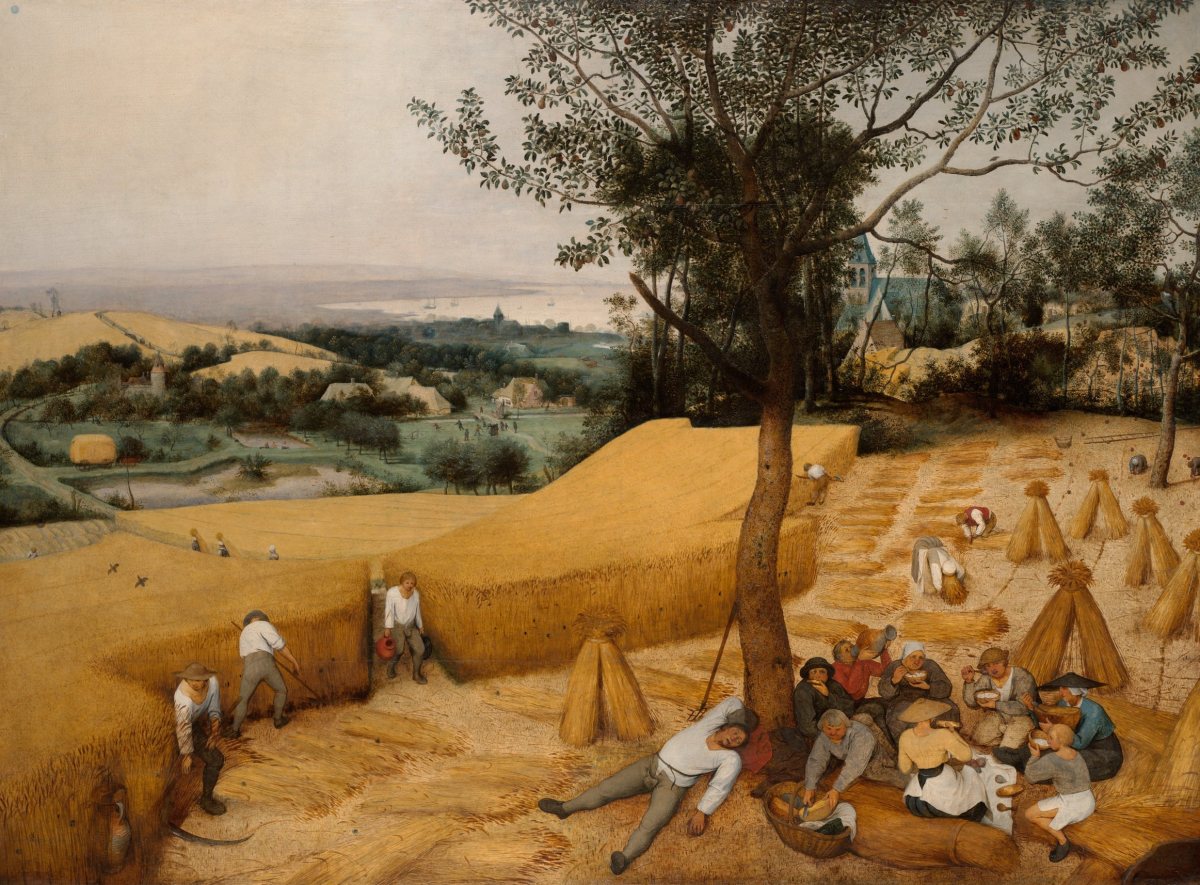
Answer one question out loud and watch The Harvesters color in while you talk.